

Adjunct Instructor
Rebecca Jumper Matheson
- School of Graduate Studies
- Fashion and Textile Studies
Artisans and Designers
American Fashion Through Elizabeth and William Phelps
One couple’s journey to crafting a new design identity in midcentury America.
Long before the fashion industry formally addressed questions of sustainability and advocated for “slow fashion,” William and Elizabeth Phelps, a husband-and-wife design duo, were already working to create handcrafted leathergoods and functional women’s sportswear that could be worn for decades. Active from the 1940s to the late 1960s, Phelps Associates quickly won acclaim and found commercial success, attracting a broad clientele and becoming known for quality, utility, and craftsmanship.
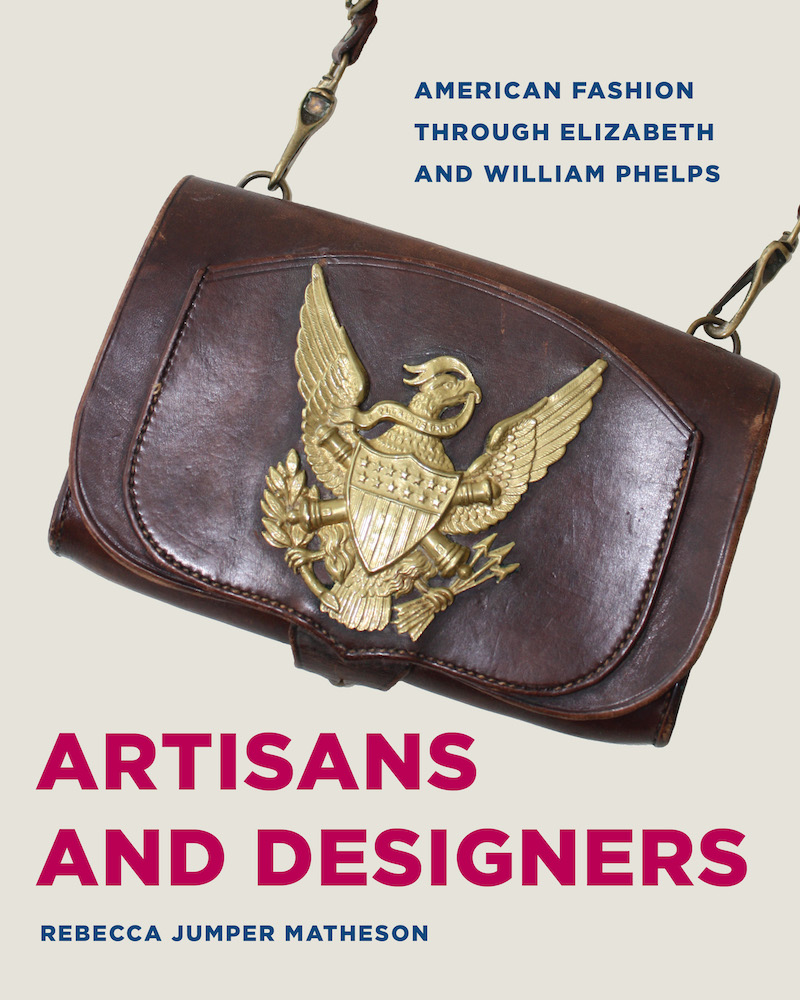
Using vintage metal insignia and hardware, often military surplus, the Phelpses designed bags and belts that answered the need for American-made luxury goods during and after World War II. In the postwar period, the Phelpses experimented with new methods of production and branched into ready-to-wear fashion. Meanwhile, the pair worked to revive artisan workshops, emphasized fostering positive work environments for their employees, and offered employment opportunities for injured veterans.
Artisans and Designers is the first in-depth analysis of the Phelpses’ partnership, their often-overlooked contributions to the fashion industry, and their forward-thinking business practices. Rebecca Jumper Matheson draws on their pieces to connect their work to larger conversations about sustainable fashion, consumerism, industrialization practices, and the intersection of art with American identity during and after World War II. The result is an engagingly written, richly illustrated account of a brand committed to creating classic pieces that have stood the test of time.
How did you first come up with the idea for this work?
I have been researching American fashion in the WWII period for quite a while. When I was writing my previous book, Young Originals: Emily Wilkens and the Teen Sophisticate, I saw many examples of the Phelpses’ leathergoods and became interested in their work.
What was your research process like?
I did a lot of object-based research, studying the bags, belts, and clothing in person. I also combine that with wide range of visual and textual primary sources.
How long did you work on this before it was published?
Ten years! It was also the subject of my doctoral dissertation at the Bard Graduate Center.
Does this work relate to your role at FIT? If so, how?
Yes, I teach and mentor graduate students in the “how-to” of writing their qualifying papers. In teaching, I draw from my own experience with research and publication, as well as my experience as an alumna of the FIT MA Program in Fashion and Textile Studies.
What was your biggest challenge? What was most rewarding?
The biggest challenge is definitely image rights. The most rewarding thing for me is having the print book in hand!
Have you published any other books or have any upcoming publications?
Yes, I am also the author of The Sunbonnet: An American Icon in Texas (2009), and Young Originals: Emily Wilkens and the Teen Sophisticate (2015).
I contributed chapters to the books Fashion in American Life (2024, edited by Clark and Peters), and The Places and Spaces of Fashion, 1800–2007 (2008, edited by Potvin).
- Professor at FIT since 2009
- Book published in November 2025